
Why experienced devs crash in coding interviews (and how to fix it)
Patterns, simplicity, communication


Developers often crash in coding interviews because the interview environment rewards a specific skill set: fast pattern recall, rigorous simplicity, and explicit narration of your thinking. The good news is that each of these is learnable with deliberate practice.
The senior–interview paradox
On the job, senior engineers are rewarded for things like long‑term architecture, risk reduction, and mentoring, none of which look anything like solving graph problems on a whiteboard. Coding interviews, especially at big tech and high‑growth companies, are optimized for something narrower:
Can you recognize a common algorithmic or design pattern quickly?
Can you implement a clean solution in 30–45 minutes?
Can you communicate clearly under mild pressure so a stranger can follow your reasoning?
That mismatch is why experienced engineers walk out of interviews thinking, “I’d never do that in real life,” while interviewers quietly down‑level or reject them.
Rusty pattern recall: you know this, but not fast enough
Common issues:
Re‑deriving basics instead of recognizing them (e.g., discovering binary search from scratch instead of naming and applying it).
Half‑remembered implementations that lead to off‑by‑ones or missed edge cases.
Spending 25 minutes exploring the wrong idea because you didn’t map the problem to a known pattern early.
How to fix the recall gap
You do not need to become a grind‑every‑day LeetCoder, but you do need a refreshed mental index:
Curate a small pattern pack: arrays/strings, hash maps/sets, two‑pointers, binary search, heaps, DFS/BFS, backtracking, common tree and graph traversals, basic DP, and a few classic greedy patterns.
For each pattern, pick 2–3 representative problems and solve them end‑to‑end with time pressure. When you finish, explicitly label the pattern out loud: “This was multi‑source BFS on a grid with a queue.”
Build a “pattern checklist” you silently run at the start of each question: “Is this sorted? Can I sort it? Graph? Tree? Sliding window? Interval scheduling?”
This turns interview questions from puzzles into “find‑the‑right‑template and tailor it” exercises.
Over‑engineering: when “staff energy” looks junior
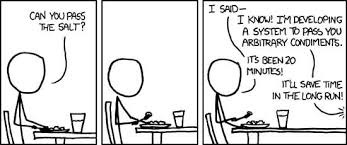
In real systems, thinking ahead and exploring alternatives is a mark of seniority. In a 45‑minute interview, trying to anticipate future requirements often reads as “doesn’t understand scope” or “loves shiny tech.”
Typical over‑engineering moves:
Introducing frameworks, complex data structures, or distributed components for a toy problem (“let’s put a message queue and a search cluster in front of this CRUD API”).
Premature optimization: worrying about sharding, caching layers, or lock‑free structures when the interviewer only wants a correct single‑node solution.
Trying to design a generic library when the prompt is asking for a concrete function.
From the interviewer’s chair, this creates three problems:
You run out of time on the basics.
You can’t go deep on any one component because you’ve scattered your attention.
It suggests you may be expensive to manage in a codebase that values simplicity.
How to show senior judgment instead
You still want to show you think beyond the toy version, but in layers:
Start with the simplest design that clearly meets the stated requirements, even if it wouldn’t scale in production.
Get agreement: “I’ll start with a straightforward in‑memory solution, then we can talk about how to scale or harden it if time allows.”
Implement that simple version cleanly.
Only after it works, mention one or two realistic evolutions: “If this needed to serve millions of users, I’d first add caching here, then consider sharding by user ID; we can dig into either if that’s interesting.”
This sequence shows that you can triage complexity rather than default to it.
Communication gaps: invisible failure modes
In modern interview loops, your communication is as heavily weighted as your correctness.
Common communication pitfalls:
Diving straight into coding without restating the problem or clarifying constraints.
Long silent stretches while you’re thinking, which makes it impossible for the interviewer to help you course‑correct.
Non‑structured rambles about tradeoffs that don’t land on a clear recommendation.
Interviewers, especially for senior roles, want to see you as a partner they could comfortably pair‑program or design with. When they can’t follow you, they assume working with you will feel similar.
How to communicate in the room
Treat the interviewer like a temporary teammate, not a judge:
Start with a crisp restatement: “Let me confirm: given X and Y constraints, we want Z output in O(…) if possible, right?”
Outline before implementation: “High‑level plan: I’ll parse the input, use a hash map to count, then scan once to find the minimum index of a valid candidate.”
Think out loud about tradeoffs: “We could sort for O(n log n) or use extra memory for O(n); I’d pick the second since space is cheap here.”
Check in periodically: “Does that approach align with what you had in mind, or did you want me to explore a different direction?”
After coding, narrate testing: walk through normal and edge cases and call out time and space complexity explicitly.
You’re signaling not just that you can solve problems, but that you can lead clear technical conversations.
A practical tune‑up plan
Week 1–2: refresh your toolbox
Revisit core patterns and algorithms with a concise guide or curated set of problems.
Implement each from scratch in your primary interview language until it feels automatic.
Week 3: enforce simplicity drills
For each practice problem or system design prompt, force yourself to propose the dumbest thing that works first.
Only after it’s working are you allowed to mention optimizations or additional components.
Week 4: communication bootcamp
Do 4–6 mock interviews with peers or a coaching platform, focusing purely on narration, structure, and pacing.
Record a couple of sessions, listen back, and write a short script for your openings (“restatement + constraints + plan”) and closings (“complexity + next improvements”).
Ongoing: interview‑specific reps, not lifetime habits
Treat this like training for a race: deliberate, time‑boxed, and with a taper.
Once your “interview muscles” are warm, maintenance practice once a week is usually enough.